Expert Plumbers Co
Drain Cleaning near me
50 states, DC and PR

Plumber for Drain Cleaning Near Me

One slow sink, or every drain in the house backing up? Tell us which, and we connect you with a plumber who handles drain cleaning. Our phone line is open nights and weekends: (380) 262-9173.

Nationwide Coverage
Symptom-First Matching
24/7 Emergencies
No Obligation
52+
States covered
24/7
Live phone line

About Expert Plumbers Co

Drain Cleaning Company Near Me

Expert Plumbers Co is a referral service. We do not employ plumbers, we do not send our own crews, and we do not quote prices. We take a description of the problem and connect the household with a local Plumber who handles that kind of blockage.

That is the whole job, and it is worth doing carefully. A call about Drain Cleaning can mean a slow bathroom sink or a sewer line that has failed under the yard. Those are different jobs with different equipment, and the plumber you are matched with should know which one it is before arriving.

What happens when you call (380) 262-9173:

  • You tell us what the drain is doing, in your own words.
  • We ask a few plain questions. One fixture or several? How long? Any gurgling? Any water coming up where it should not?
  • We connect you with a local plumber who handles that kind of blockage, including emergency drain cleaning when water is backing up.
  • You then work out the scope, the cost and the timing with that plumber directly.

The description matters. "It's slow" tells us little. "The kitchen sink drains slowly and smells, and the dishwasher is fine" points to grease on the pipe wall in one branch. "The tub gurgles when the toilet flushes" points to a vent or the main line. A plumber who hears that up front brings the right machine the first time, not on a second visit.

We cover all 50 states, DC and Puerto Rico. Call (380) 262-9173.

01

Symptom-first

One slow fixture is a different job from every drain in the house backing up.

02

Independent

Pricing and on-site work are set by the local provider, not by us.

03

Local

Partners serve the city you called from.

04

Whole-system

Fixture drains, branch lines, main line and sewer lateral.

Drain Cleaning services

Drain Cleaning Services Near Me

Symptom-led Drain Cleaning and related services across the U.S. Tell us what the drain is doing and we match it to the right plumber.

01 / 06

Drain Cleaning

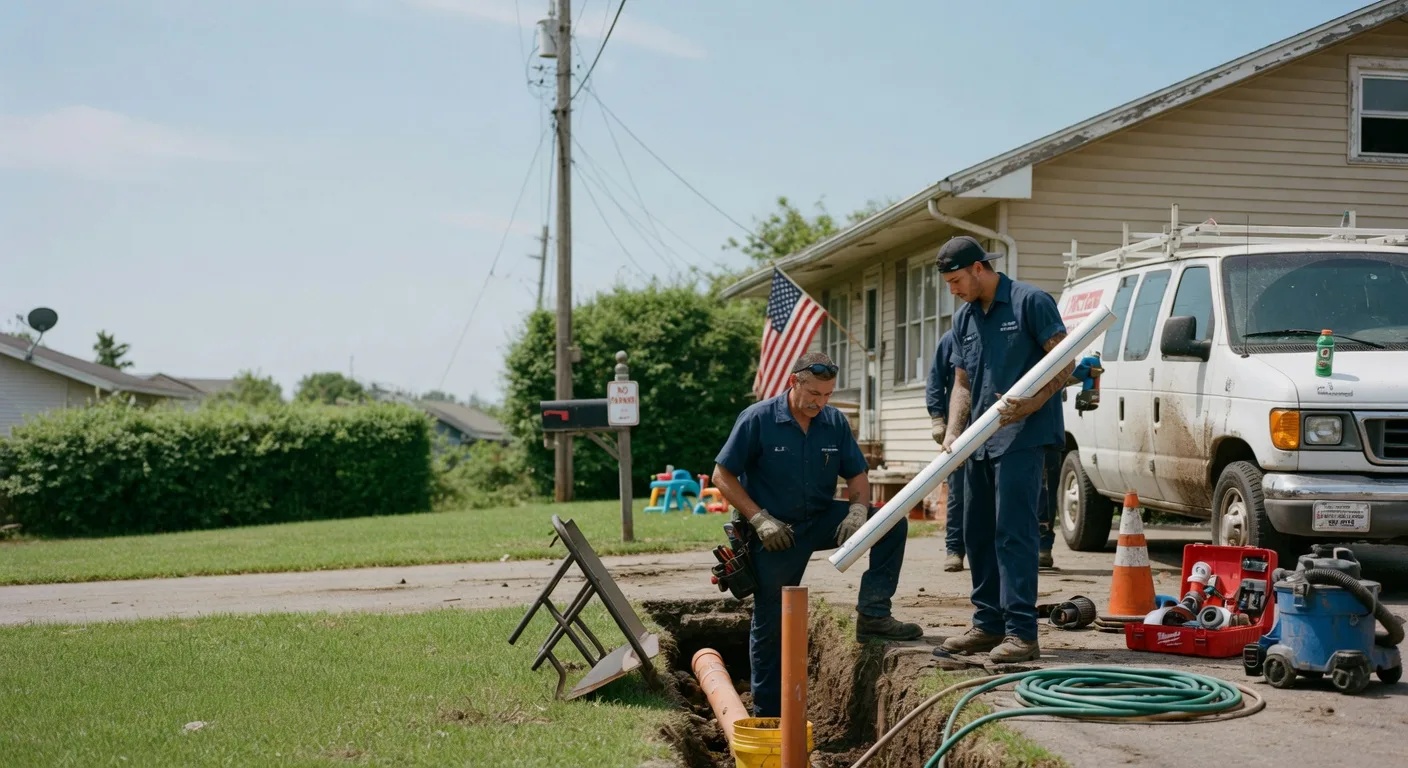
A single sink, tub, or floor drain running slow in the U.S. usually means one localized clog, not a whole-house problem, and a cable machine can clear it.

Talk to a pro
02 / 06

Emergency Drain Cleaning

Sewage backing up through a floor drain or tub in the U.S., or water rising instead of draining? Stop running water and call before it spreads.

Talk to a pro
03 / 06

Main Line Cleaning

Every drain in the house backing up at once in the U.S. points to the main line, not one fixture, and needs a larger cable or jetting.

Talk to a pro
04 / 06

Hydro Jetting Service

Grease-lined kitchen or main lines in the U.S. that a cable keeps missing need hydro jetting, which scours the full pipe wall clean.

Talk to a pro
05 / 06

Sewer Line Inspection

Recurring backups or slow drains across the U.S. with no clear cause? A camera inspection finds the actual break, root, or bellied section first.

Talk to a pro
06 / 06

Sewer Line Repair

Multiple drains backing up at once in the U.S., water pooling around a cleanout, or sewage odor in the yard usually points to a damaged sewer line, not a single clog.

Talk to a pro

Why choose us for Drain Cleaning

Local Pros for Drain Cleaning

"The kitchen sink is slow." "Every drain in the house is gurgling." "Water came up in the shower when the washer ran." Each of those points to a different cause and a different tool.

One fixture or the whole house? A single slow sink is usually a local clog: grease on the pipe wall of a kitchen line, hair and soap in a bathroom trap. Every drain slow, or water surfacing in the lowest tub or floor drain, points to the main line. Causes include root intrusion at a clay joint, a bellied line holding water, scale in old cast iron, or a failed sewer lateral. Gurgling with no standing water can be a blocked vent stack.

Safe homeowner checks:

  • Run other fixtures and note which ones are slow.
  • Clear the visible stopper or strainer and check the trap under the sink.

Stop running water and call now: water rising in a tub, shower or floor drain, sewage smell indoors, or any backup that continues after you stop using water.

Which tool: A cable machine is enough for a soft clog or a root cut at one point. Grease and scale coat the whole wall, and a cable only punches a hole through them. Hydro jetting scours the pipe clean. If roots, a sag or a crack is suspected, a camera inspection shows what is down there before anyone digs.

What drives cost: access to the line, the parts or materials involved, how much has to be opened up or removed, and any permit or code requirement.

We are a referral service. For emergency drain cleaning, call (380) 262-9173, including nights and weekends.

  • Independent local partners
  • 24/7 emergency phone line
  • No obligation
  • Nationwide coverage
  • Symptom-first matching
  • Nights and weekends
Call (380) 262-9173
Why choose Drain Cleaning near me

How it works

Four simple steps to Drain Cleaning in USA

01

Tell us the symptom

Tell us what the drain is doing and where you are.

02

Matched to the job

We match the problem to a plumber who has the right equipment for it.

03

They contact you

They contact you directly to arrange the visit.

04

If it is not right

If they cannot help, tell us and we find another.

Learn more

Slow Drain or Whole-House Backup: How to Tell the Difference

The kitchen sink drains a little slower every week. The toilet gurgles when the washer empties. There is water around the basement floor drain and you cannot tell where it came from. Each of these points to a different problem, and Drain Cleaning is a different job for each.

One fixture slow, everything else fine. The blockage is downstream of that fixture's trap. Usually it is hair, soap scum or grease coating the pipe wall in a branch line. This is a local job.

Several fixtures affected. If the lowest drains in the house back up when an upstairs fixture runs, the main line or the sewer lateral is involved. Common causes are roots entering a clay joint, a bellied section that holds water, scale narrowing cast iron, or a failed lateral. Gurgling at more than one fixture can also mean a blocked vent stack, which stops the system from breathing.

Safe homeowner checks:

  • Run water at each fixture and note which ones are slow.
  • Use a plunger on a single sink, tub or toilet.
  • Find the outdoor cleanout cap and leave it closed.

Stop there. Do not pour chemical openers into a line that is already full, and do not keep flushing to see if it clears.

Stop running water and call now if sewage comes up in a tub, shower or floor drain, if every drain is slow at once, or if a sewage smell comes with standing water. That is Emergency Drain Cleaning territory. More water only pushes more waste into the house.

Learn more

Cable, Hydro Jetting or Camera: Matching the Tool to the Blockage

A cable machine spins a steel cable with a cutting head down the line. It punches through a soft clog or a root mass and restores flow. For one slow fixture or a fresh blockage, that is often enough. Where it falls short: it opens a channel but leaves grease and scale on the pipe wall, so the drain can slow down again.

Hydro jetting sends high-pressure water through a nozzle and scours the full pipe wall. It is the right tool for heavy grease build-up, sludge, and roots that keep coming back. Whether a line can take it depends on the pipe's condition, so the plumber decides on site.

A camera inspection answers the question the other tools cannot: what is actually wrong. If the same drain backs up again, or the whole house is affected, a camera shows root intrusion, a bellied line, a cracked joint or a failed lateral.

What drives the cost of the job: access to the line, the pipe material and parts involved, how much has to be opened up or removed, and permit or code requirements. None of that can be judged from a description alone.

Expert Plumbers Co is a referral service. We do not employ plumbers or send crews. You describe the problem, and we connect you with an independent local plumber in the United States who handles that kind of job. That plumber sets the pricing and does the work.

Call (380) 262-9173 for Drain Cleaning or Emergency Drain Cleaning. Tell us what your drains are doing.

Drain Cleaning FAQs

Drain Cleaning FAQs

Frequently asked questions about Drain Cleaning

Answers to common questions about Drain Cleaning and what to expect from an independent local Plumber anywhere in the U.S.

Talk to a real person
Sewage has backed up into my basement. What do I do right now?
Stop running water in the house now. That means toilets, sinks, showers, the washing machine and the dishwasher. Every gallon you send down the line has nowhere to go but out through the lowest opening, which is your basement floor drain. Stay out of the water. Keep children and pets away. If you must go in, wear boots and gloves, and do not touch outlets or appliances while standing in it. Do not pour chemical cleaners down any drain. One safe check: look at whether other drains upstairs are gurgling or slow. If they are, the main sewer lateral is blocked or failing. Typical causes are root intrusion at a clay joint, grease build-up on the pipe wall, a bellied line holding water, or a collapsed section. A single slow fixture is a branch line problem. A basement backing up with the whole house affected is a main line problem, and it needs different equipment. This is Emergency Drain Cleaning, and it is not a homeowner job. A cable machine at the cleanout can clear a soft blockage. Roots and grease usually need hydro jetting, and a camera inspection shows why the line stopped. Cost depends on cleanout access, what is found in the pipe, how much has to be removed or repaired, and any permit requirement. Expert Plumbers Co is a referral service. Call (380) 262-9173 and we will refer you to a plumber serving the U.S. Once the water is stopped, take photos of the water line and the affected items before anything is moved, and write down the time you first noticed it. If the backup is sewage, do not use a wet vacuum or a household fan on it, and do not start throwing out porous items until the plumber has opened the line. Tell the plumber what ran just before the backup, such as a load of laundry or a long shower, and whether the floor drain or a basement toilet was the first place it showed. In an older home with a clay or cast iron lateral, the cause is often roots or a collapsed section. In a newer home it is more often a belly, a joint that was set poorly, or a heavy wipe or grease blockage. After the line is cleared, the floor and walls still need proper cleaning and drying, and that is separate from the plumbing repair.
The toilet flushes slowly but never fully clogs. What is going on?
The toilet flushes, the bowl drops slowly, and it creeps back up before settling. It never fully clogs, so it is easy to ignore. Do not ignore it. A slow flush means something is partly in the way. There are three common causes. First, the trap or the pipe just past it is narrowed by paper, wipes, or grease and soap scale on the pipe wall. Second, the vent stack on the roof is partly blocked, so air cannot follow the water down. You may hear gurgling or see the bowl bubble. Third, the branch line is bellied, or has roots at a joint, and water moves through it slowly. Check one thing first: is it only this toilet, or are the tub, sink and other toilets slow too? One slow fixture points to that fixture's branch. Slow everywhere points to the main line or lateral, which is a different job with different equipment. Safe homeowner check: use a plunger, stop flushing wipes, and watch whether it comes back. Stop running water and call now if other drains gurgle when you flush, water rises in a tub, or there is a sewage smell in the house. A cable machine usually clears a single branch. Recurring slowness, roots or grease often call for hydro jetting, and a camera inspection shows which. Expert Plumbers Co is a referral service. Call (380) 262-9173 to be connected with a plumber in the U.S. for Drain Cleaning. A slow flush that gets worse over a few weeks is a sign that the cause is growing, not stable. If the water is also making a gulp or a bubble in a nearby sink or tub when you flush, that points toward air being pulled through a trap, which is the vent stack problem. Check whether the slowness is worse during heavy rain or after the washing machine runs, because that tells the plumber whether the main line is filling up. Do not keep adding more water in the hope that the extra weight will push the blockage through, since it can drive waste up into the lowest opening. Tell the plumber if the toilet was recently moved, replaced or fitted with a water-saving model, because a low-flow toilet on an old line with little fall can leave solids behind. In older homes, the toilet branch is often a long run with a modest slope, which makes it more likely to hold debris.
Does hard water cause drain problems, or only water heater problems?
The bathroom sink used to run fine. Now it drains a little slower each month. That slow creep is the sign of scale, not a clog. Hard water does more than coat a water heater. Minerals from the supply side leave a chalky layer inside a trap. In a bathroom line they bind with soap residue into a hard, grey film. The bore narrows a fraction at a time, so you notice a gradual slowdown rather than a sudden blockage. Old cast iron is a different problem. Inside drain pipe that has been in the ground or a wall for decades, rust forms lumpy mounds called tubercles. These are not hard-water minerals. They are the pipe corroding from within, and they snag grease and paper. The two tools do different work. A cable punches a hole through the build-up. Water drains again, but the scale stays on the wall and the line narrows again. Hydro jetting strips the wall back to the pipe surface. Jetting old iron hard without looking first is a gamble, because thin, flaking pipe can fail under pressure. That is why a camera inspection comes first on old iron. It shows wall condition and cracks before anyone sets the pressure. Safe homeowner check: find out whether one fixture is slow or every drain in the house is, then clean the visible stopper and trap. Stop running water and call now if several drains slow together, or water backs up at a floor drain. One slow bathroom sink is usually a cable or trap job. A whole-house slowdown in old iron often needs a camera first and possibly jetting. Expert Plumbers Co is a referral service. We connect you with an independent local plumber in the U.S. Call (380) 262-9173. A water softener changes the picture a little, and it is worth telling the plumber if you have one. Softened water leaves less mineral scale, but it can feel slippery and does not stop soap and hair from building up on the pipe wall. If your water is hard and you have no softener, the mineral film inside traps and short branch lines is the main cause of the slow creep. A simple habit helps: use a hair catcher in the tub and basin, and rinse the sink with hot tap water after use so soap does not cool and settle on the wall. Do not rely on vinegar or store-bought descalers to clear a drain, as they only treat the surface. In newer homes with plastic pipe, scale is mostly a trap and fixture issue. In older homes with iron or galvanized pipe, scale and corrosion together can narrow a line enough that replacing a section is more sensible than repeated cleaning.
Two houses share one sewer line. Whose blockage is it?
Your basement drain is backing up and the neighbor says theirs is fine. Or both are backing up and each blames the other. On a shared sewer lateral, that argument is common. In older terraced or paired properties, two buildings join one lateral before it reaches the main. A blockage downstream of that junction backs up into whichever building sits lower. That is often not the building that caused it. Roots at a clay joint, grease build-up or a bellied line can sit past the junction and still flood one side. One slow sink is local, and a cable machine usually clears it. Every drain in the building backing up points to the lateral. That calls for a camera inspection, and often hydro jetting. A camera inspection and a locator establish where the junction is and where the blockage point sits. Distance readings matter: how far from the cleanout to the junction, and to the fault. They show which side of the junction the fault is on. Responsibility depends on local rules and on where the fault sits. Some places treat the shared section as a joint matter for the owners, others place part of it with the utility. Do not assume. The city or sewer utility can say how it works for a given address. Safe homeowner check: ask the neighbor if they have symptoms, and hold off on water use. Stop running water and call now if sewage is rising in a tub, shower or floor drain. What a repair involves depends on access, the materials, how much has to be opened up, and any permit or code requirement. Expert Plumbers Co is a referral service. We refer homeowners in the U.S. to an independent local plumber for Drain Cleaning and Emergency Drain Cleaning. Call (380) 262-9173. Before anyone argues about cost, get the facts in hand. Agree with the neighbor to share the camera footage and the distance readings, so both households work from the same picture. Check the property records for any easement or shared-line agreement, since some older properties carry one. Ask the local building department or sewer utility who maintains the section between the junction and the main. Ask your home insurer whether sewer backup is covered. Many policies treat it as an optional add-on, and a claim usually needs documents. Once the line is clear, the sensible follow-up is a maintenance plan both sides accept. That might be periodic jetting, or a cleanout fitted at the junction so future blockages can be reached without digging. A cleanout in the right spot turns a future emergency into a short job. Keep the plumber's written findings. They settle most disputes about where the fault sat.
Water or sewage is seeping out around the cleanout cap in my yard. What does that mean?
If liquid is seeping up around the cleanout cap, the sewer line is full to ground level at that point. The cleanout is a capped pipe that gives a plumber direct access to the main line, and it is often the lowest open point on the system. When a blockage sits downstream, waste water rises until it finds the weakest spot, and that is frequently the cap. Less often the cap itself is the problem: a cracked cap or worn threads can weep a little after heavy use. The difference is the smell and the timing. A damp ring with no odor that dries out is one thing. Grey or dark water with a sewage smell that returns every time the house uses water points to a blocked or partly collapsed line. Look at the rest of the house. If one fixture is slow, the trouble may be local. If several drains are slow, toilets gurgle, or a floor drain or shower fills when the washer runs, the main line is the likely culprit. Safe checks you can do: Keep children and pets away from the wet area. Hold off on laundry, dishwasher cycles and long showers. Do not unscrew the cap. A line under pressure can spray sewage when the cap comes off, and that is a health risk. Stop running water and call now if sewage is reaching the yard in a steady flow, if it is entering the house, or if the seep keeps growing while you are using as little water as possible. On the repair side, a cable machine is often enough for a soft blockage such as paper or grease. Roots, heavy grease build-up or scale usually call for hydro jetting or a cutting head. A camera inspection afterwards shows whether the pipe is cracked, bellied or offset at a joint, which decides whether cleaning will hold or whether a repair is needed. Cost depends on how easy the cleanout is to reach, how far the blockage sits from it, how much needs to be dug or removed if a repair follows, and permit requirements under local code. If the line has to be opened for repair, the local building department may need to be involved. To be connected with an independent local plumber in the U.S., call Expert Plumbers Co on (380) 262-9173.
Can I watch the camera footage from my sewer line, and what should I ask the plumber to show me?
Yes, you can ask, and a plumber who does this work properly will usually be glad to show you. The picture is the clearest evidence there is of what is happening inside a pipe you cannot see. Most inspection cameras feed a small monitor at the cleanout or a tablet held by the plumber. Ask to watch it live. Ask to see the footage again afterward, and whether it was recorded. A recording matters if you later need a second opinion, a repair quote from another plumber, or a record for a home sale. Here is what to ask to see. The start of the run. A clean, round pipe wall tells you the line was open and what material it is, such as clay, cast iron or plastic. Any joint that looks offset, cracked or separated. Ask the plumber to pause on it. Root growth. Fine roots look like hair or threads at a joint. Heavy roots fill the pipe like rope. Standing water. A section that holds water is a bellied line, a low spot where debris collects. Ask how long the section is. Scale or heavy buildup, especially in cast iron, where the wall looks rough and lumpy. The end of the run. Where did the camera stop, and why? A collapse, a hard blockage, or a break all look different. Then ask how far from the cleanout each problem sits. Many cameras carry a footage counter or a locator that finds the spot from above. That distance is what tells you how much digging a repair might involve. A few cautions are worth knowing. The image can look worse on a small screen than it is, and a single hairline crack is not the same as a collapse. A plumber should be able to say which it is and what it means for the next step. If the camera could not pass a blockage, ask what is beyond it, because the camera has only seen part of the line. What camera work adds to a visit depends on access and how long the run is, and it often heads off a repair based on a guess. If you need a drain cleared in the U.S., Expert Plumbers Co can connect you with an independent local plumber at (380) 262-9173.

Talk to a local Plumber

Need a plumber in USA for Drain Cleaning? Call now.

Describe the problem and we connect you with a local Plumber for Drain Cleaning or Emergency Drain Cleaning. Call (380) 262-9173.

Call (380) 262-9173 Services